




- Home > News > Product News
What Is an OPS Computer? A Complete Guide for Interactive Display Buyers
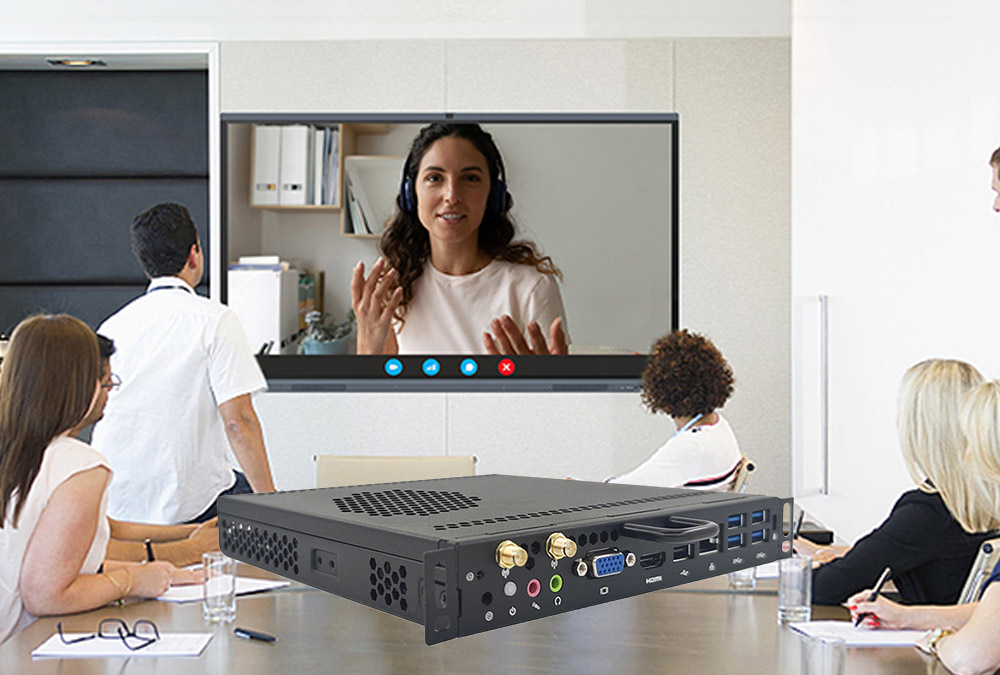
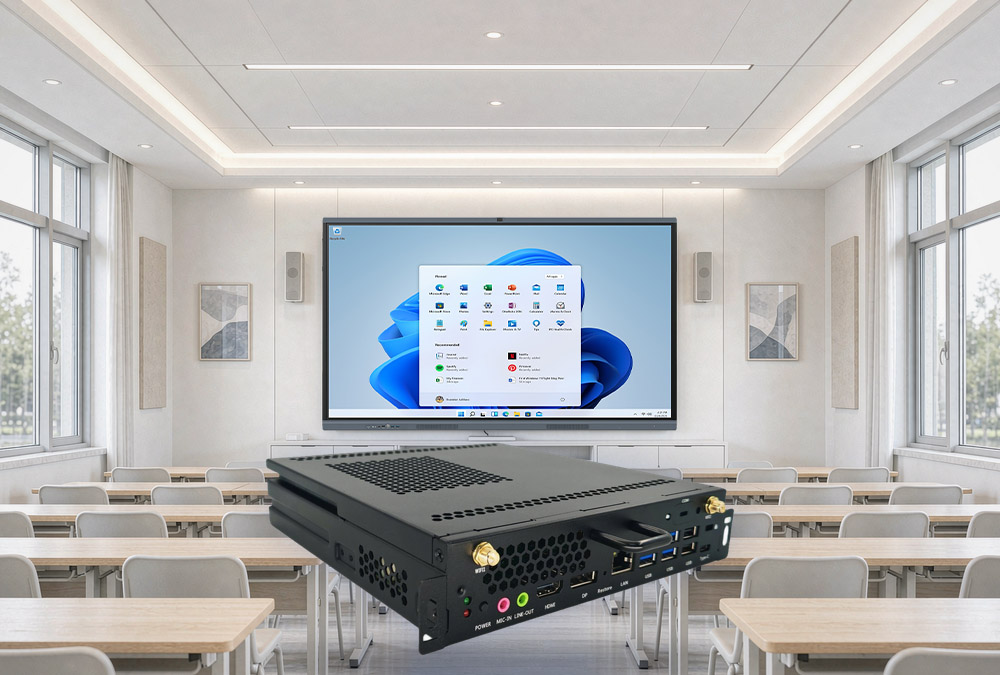
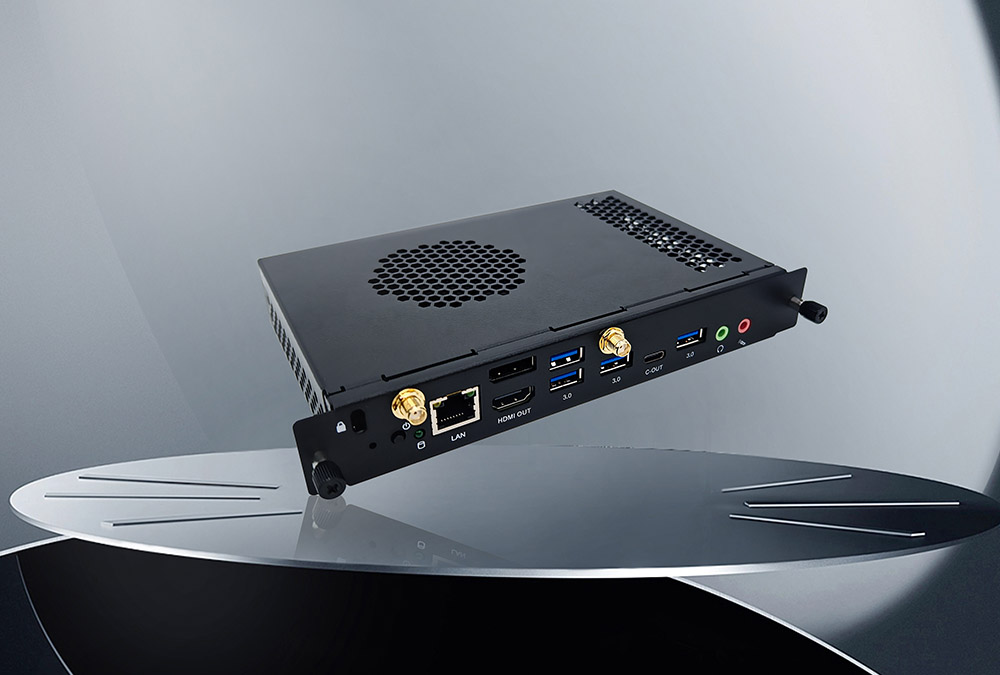
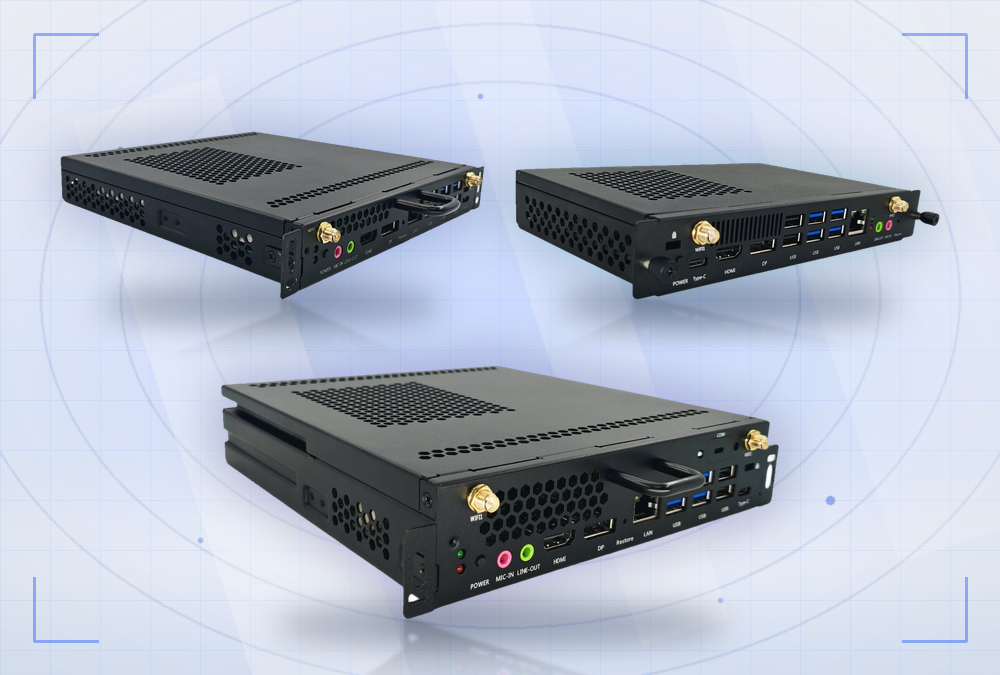
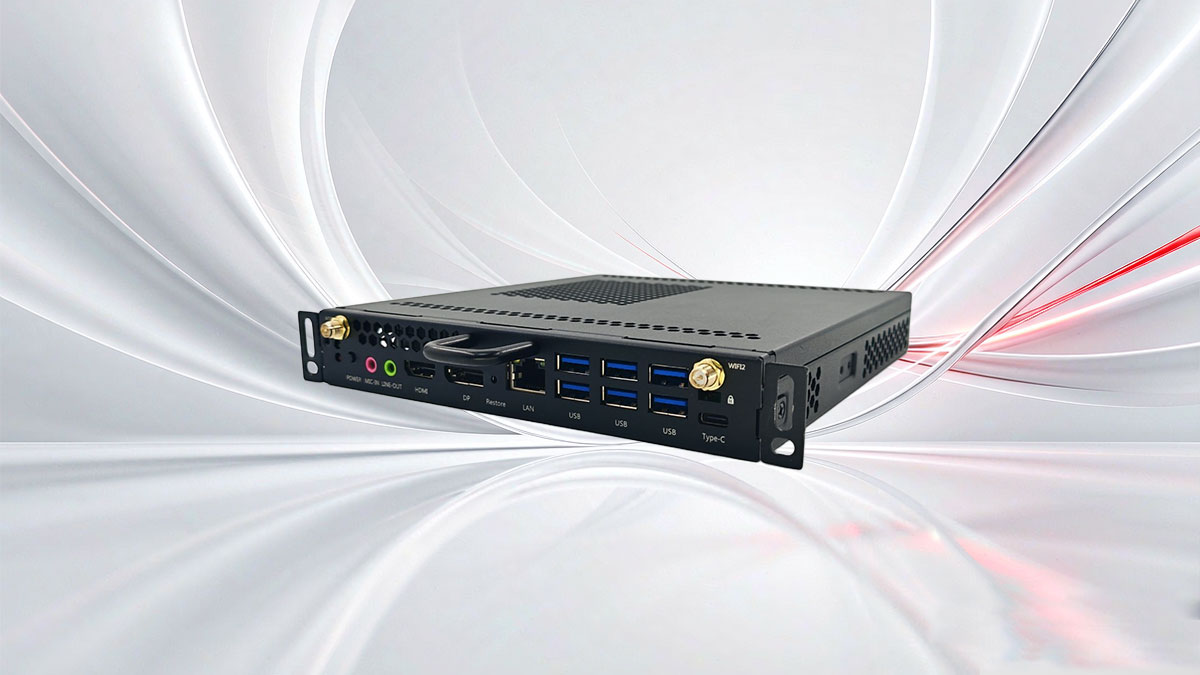
If you have ever specified an interactive flat panel for a classroom or meeting room, you have met the four letters OPS. Short for Open Pluggable Specification, OPS is a standard created by Intel that defines a compact, pluggable computer module — roughly the size of a thin book — that slides into a dedicated slot inside a display.
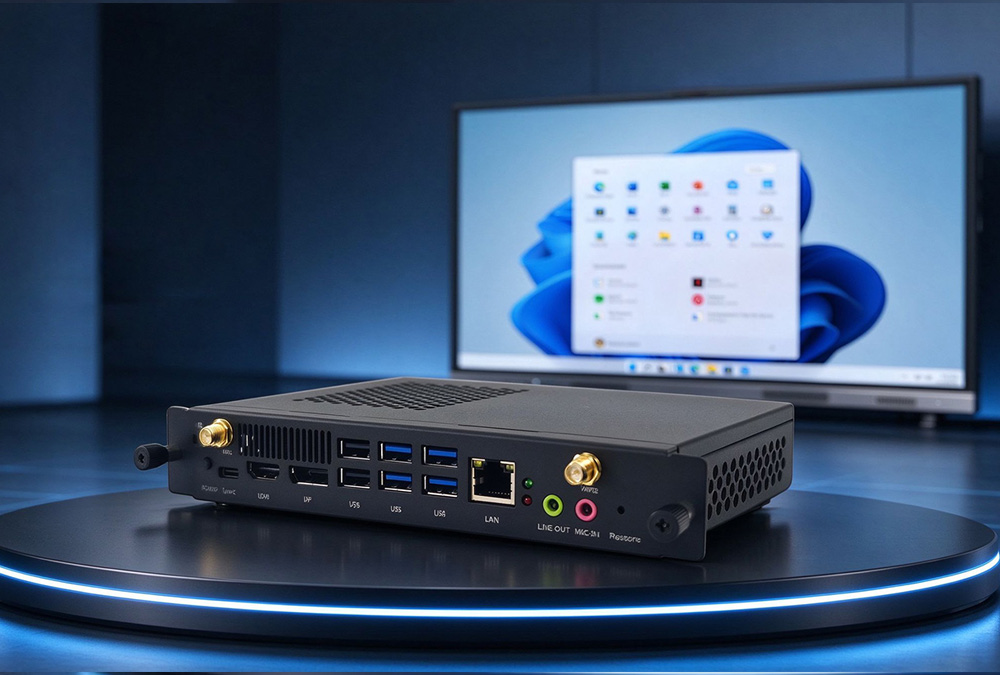
How OPS works. The module carries a full PC: CPU, memory, storage, Wi-Fi and ports, connected to the display through a standardized 80-pin connector. Power, video, audio and touch signals all pass through that single slot. Push the module in, tighten two screws, and an ordinary interactive display becomes a complete all-in-one Windows computer — with the touch screen as its monitor.
Why buyers choose OPS.
1. One screen, two brains. Most interactive panels run Android for daily use; the OPS module adds full Windows when you need heavyweight software such as office suites, design tools, teaching courseware or video conferencing platforms.
2. Easy upgrades. Need more speed in three years? Replace the module, not the whole display. This protects your panel investment and simplifies budgeting.
3. Simple service. If a computer fails, swap the module in minutes — no dismantling the screen, no long downtime. For schools with dozens of classrooms, this is decisive.
4. Clean installation. No external PC, no cable mess, no separate power brick. The computer lives inside the display.
How to choose an OPS module. Check five things: the CPU class (Intel Core i3/i5/i7/i9 to match your workload); 4K video output support (3840×2160 at 60Hz for crisp text on large panels); networking (gigabit LAN plus dual-band Wi-Fi and Bluetooth); cooling design (copper heat sinks mean quieter, longer life); and physical compatibility with your display's slot size.
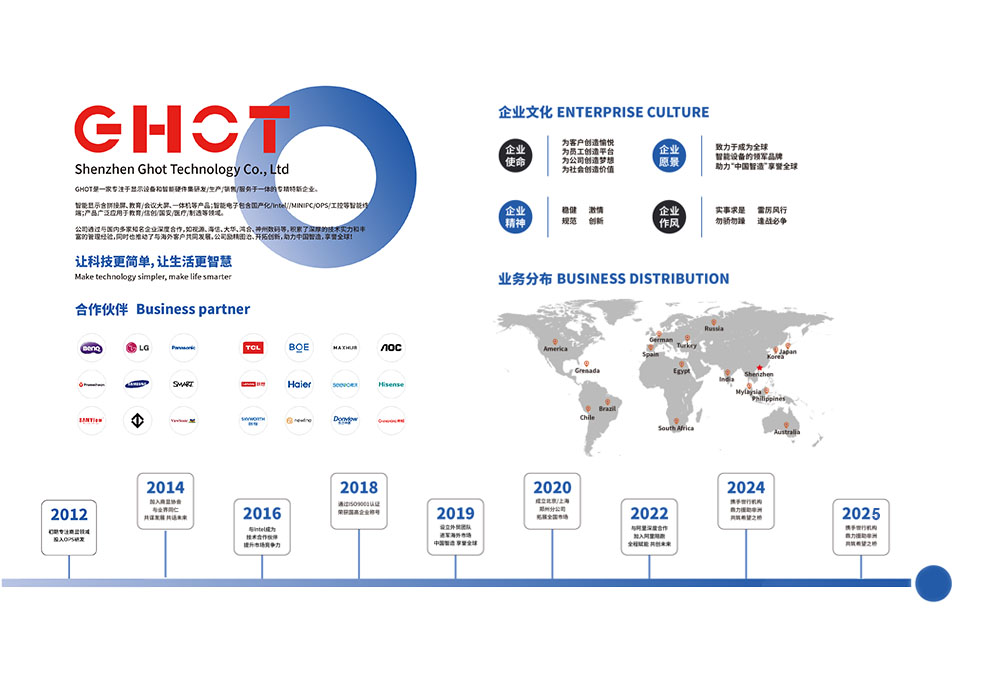
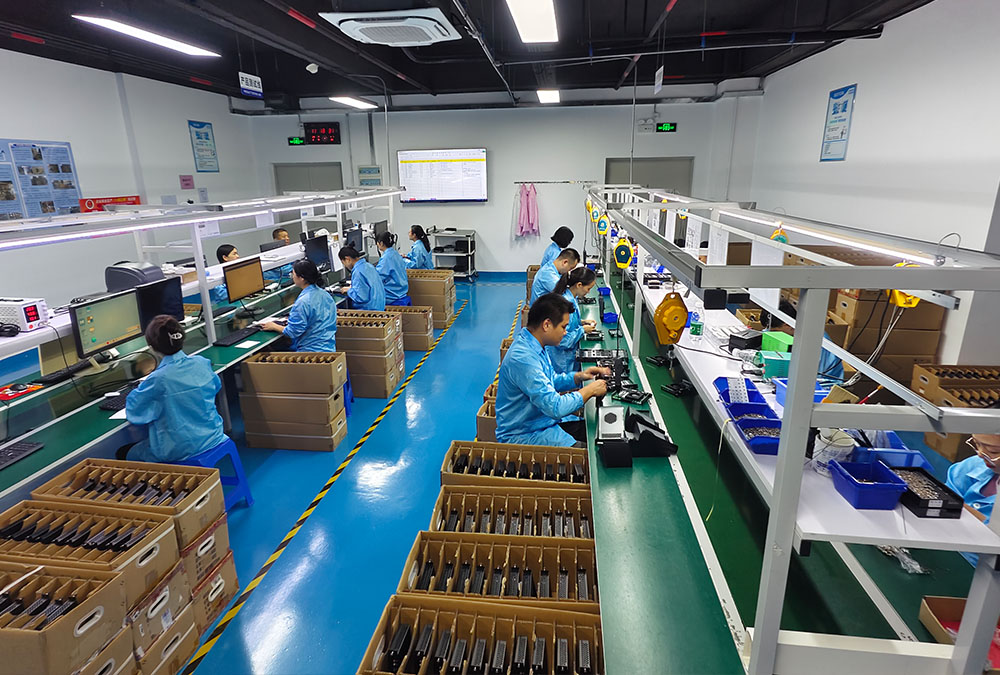
Where GHOT fits in. GHOT manufactures OPS computers supporting Intel Core i3/i5/i7/i9, true 4K 60Hz output, gigabit networking, dual copper heat sinks and optional discrete graphics — in the two most common form factors. Read the next article for full specifications, or contact us for a compatibility check for your display model.
Related Cases
MORE >-
![field.arcurl}]()
OPS PC Supplier Audit Che
In the wave of digital audio revolution, “Walk Play” APP with its cutting-edge technology brings USB Type-C digital hea
-
![field.arcurl}]()
Verified Quality: GHOT Ce
See how GHOT’s complete certification portfolio mitigates compliance risks in bidding and customs clearance for hassle-free p
-
![field.arcurl}]()
About GHOT | Shenzhen Man
GHOT Technology is a Shenzhen-based manufacturer of OPS computers,OPS PC,Mini PC, industrial PCs and Interactive displays — 6
-
![field.arcurl}]()
OPS PC for Meeting Intera
GHOT OPS PC is pluggable computing module for interactive meeting flat panels. It enables smooth video conference, wireless c
-
![field.arcurl}]()
GHOT Company History | Mi
From founding in 2012 to ISO certifications, automated lines and global trade — explore the development history of Shenzhen G
-
![field.arcurl}]()
GHOT OPS PC | OPS Module
GHOT OPS computer powers interactive flat panels & smart blackboards for classrooms. Enjoy seamless Android/Windows dual syst
-
![field.arcurl}]()
GHOT OPS Computer | OEM/O
GHOT OPS computers support Intel Core i3-i9, 4K 38402160@60Hz, gigabit LAN, dual-band Wi-Fi, dual copper heat sinks and optio
-
![field.arcurl}]()
Inside GHOT's Factory: Ho
Take a tour of GHOT‘s 6,000 m² factory: dust-free workshops, aging lines, transport vibration testing and multiple Production
-
![field.arcurl}]()
OPS Interface Explained |
Full technical breakdown of OPS interface: dimensions of standard OPS and OPS-C,GHOT offers OPS & OPS-C modules for commercial and education displays.
-
![field.arcurl}]()
What Is an OPS Computer?
An OPS computer is a pluggable PC module that turns any interactive display into a full Windows workstation. Learn how OPS wo